Category: Morton Feldman
-
The history of how the Cage/Feldman “Radio Happenings” came to be recorded at WBAI, under the direction of Ann McMillan
-
Introducing a series of posts telling the missing story of the Cage/Feldman “Radio Happenings” of 1966-67, a series of broadcasts that has been getting more and more attention on the web.
-
The manuscript score and early performances reveal an alternative interpretation of a persistent rhythm in Triadic Memories
-
To start on Feldman’s “Triadic memories”, I knew I needed to get a new copy of the score, but what I really wanted was a facsimile of the manuscript. Here’s how to get these scores and why I prefer them to the newer computer-typeset ones.
-
Recently I’ve had a very engaging e-correspondence with pianist Adam Tendler about Morton Feldman, memory, and memorizing Feldman.
-
Last year I spent a good deal of time listening to Morton Feldman’s music, trying to get a picture of his entire body of work. I started with the works of the early 1950s and marched forward through the 1960s and 1970s. When I got to 1983, I faced the need to listen to Feldman’s…
-
Recently, I learned Morton Feldman’s Two pianos, a short work from 1957. I’ve also been listening to the String quartet II lately, and I’m recognizing the same processes of musical attention in this late work—just at a massively greater scale (hours instead of minutes).
-
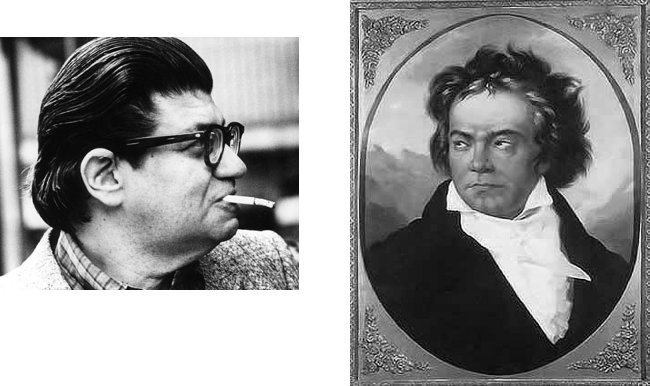
A passage from Beethoven’s Op. 90 reminds me of Morton Feldman: it makes me aware of two different worlds that a piece of music can reveal to us.
-
I’ve often made the statement that art is an act of faith. I think that my “act of faith” is the same as what Morton Feldman called “nerve”, an inner strength born out of a connection with inner necessity. I bring this subject up because I just recently listened again to Morton Feldman’s opera Neither,…
-
I recently listened to all five hours of the Cage/Feldman Radio happenings of 1966–67. Hearing them in conversation, I get a feel for a friendship and a collegiality that is more subtle than is usually described.