Author: JamesP
-
Through the composition of his “String quartet in four parts”, Cage went further on the path of “self-knowledge through self-denial”. In it, he discovered a non-expressive use of harmony, and he did it by treating materials in a systematic fashion.
-
In his writings “Defense of Satie” and “Forerunners of modern music”, Cage attempted to build a framework for music that could integrate what he needed in his life from both traditional and avant-garde music. In the process his work and thought began moving in the direction of “self-knowledge through self-denial”.
-
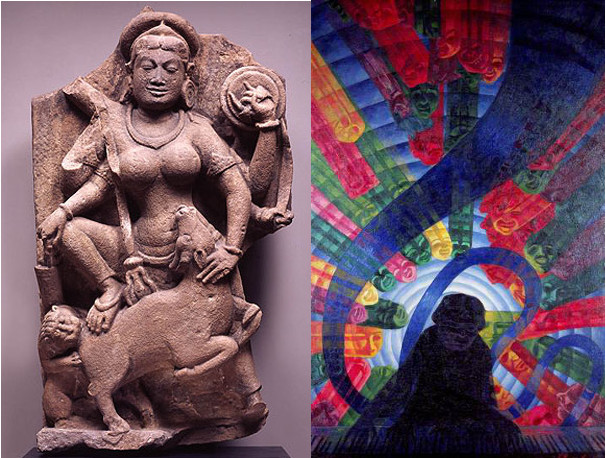
In 1948, Cage was completely in alignment with Ananda Coomaraswamy’s severe criticisms of Western art. At the same time, it directly contradicts Cage’s own career, built by playing the role of the brash individualist, modeling himself on artists such as the “Art of Noises” Futurist Luigi Russolo. This conflict is a key factor in the…
-
“To what end does one write music?” For a composer like John Cage, this was not just a question about the meaning of his work, it was a question about the meaning of his life. It is not surprising, then, that Cage would turn to sources that combined the artistic and the religious to seek…
-
John Cage’s “A composer’s confessions” tells the story of his professional ambition, its failed realization, and the resulting disappointment and self-doubt. Disillusioned in New York, he turned away from the world, looked inward, and began a search for meaning.
-
Introduction to a series of posts on John Cage’s musical and spiritual path of the 1940s and early 1950s. To understand his taking up of chance in 1951, you have to understand this journey, and to fully understand the journey, you must be able to see it as a journey into both musical silence and…
-
I just finished my latest project, which has been occupying me since January: the text for a new piece by Frances called “The third night”. It’s been an adventure and a discovery, my first text written specifically for video.
-
I’ve posted another piece of “non-non-fiction” here: As night falls, which is a kind of sequel to my earlier The old rose reader. Frances has composed a new work using this text and it will be premiered in Seattle later this month. For those not familiar with The old rose reader, here’s the story of…
-
I’ve been thinking about David Tudor and John Cage a good deal lately, following some hunches to develop what I think is a useful way of looking at their history in the 1960s. I don’t know that I’m completely convinced of my story line here, but it’s intriguing.
-
I don’t usually talk or write much about my non-musical writing. One reason for this is that I don’t really know what I’m doing when I write what I call “non-nonfiction” (is it fiction? poetry? I have no idea). That world has become more important to me over the past few years, however, and thought…