Tag: feldman
-
(This text was written to accompany Mode Records CD 327 John Cage: The works for piano 11) In June of 1980, Aki Takahashi was preparing to leave Buffalo, New York. Morton Feldman, knowing her reputation as a pianist specializing in new music, had invited her to be an artist in residence at the university where…
-
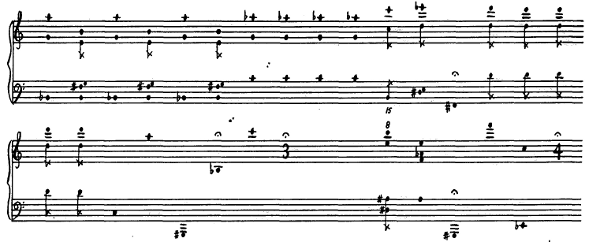
Morton Feldman’s “Projection” showed John Cage the destination of his musical-spiritual journey. It was a revelation, the opening of a door to an entirely new world, “not just the musical world outside of you”, as he later described it, “but the musical world inside of you.”
-
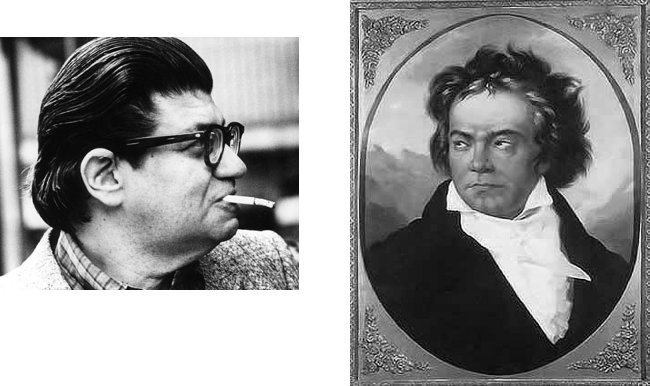
A passage from Beethoven’s Op. 90 reminds me of Morton Feldman: it makes me aware of two different worlds that a piece of music can reveal to us.
-
I’ve been reading Irving Sandler’s book on the Abstract Expressionist painters, The triumph of American painting. I picked this book up also because I wanted to study how someone writes about that art. I’ve gotten other things from my reading, too, and it makes me think about why we write about art and music, the…
-
I’ve often made the statement that art is an act of faith. I think that my “act of faith” is the same as what Morton Feldman called “nerve”, an inner strength born out of a connection with inner necessity. I bring this subject up because I just recently listened again to Morton Feldman’s opera Neither,…
-
I recently listened to all five hours of the Cage/Feldman Radio happenings of 1966–67. Hearing them in conversation, I get a feel for a friendship and a collegiality that is more subtle than is usually described.
-
The metaphor of opening doors into hidden worlds is powerful for me. I think of any writing project as starting when I find a door that opens into the world of whatever it is that I’m writing about. I’m often intimidated by my new project on Morton Feldman’s music, but I am also beginning to…
-
All composers endure bad performances of their music. It’s always demoralizing and undermines self-confidence. Some solace can be taken in the knowledge that this experience is universal: it happens to all composers, the famous and the obscure, and at all points in their careers. This point was driven home to me recently when I discovered…
-
In looking at Feldman’s piano music from the 1950s one thing I’ve noticed is that there are almost no pedal markings. I listened to Aki Takahashi’s recording of the first two Intermissions and Extensions 3 to hear how she did it.
-
I find that there’s a really sharp change in Morton Feldman’s work in 1957, with his Piece for 4 pianos. But what ties these worlds together is something that I think gets at the heart of Feldman’s work: a direct engagement with sound.