About me
Most people come to this site because of my writings about the music of John Cage. In 1988, I completed my doctoral dissertation The development of chance techniques in the music of John Cage, 1951-1956. I was, I believe, the first person to methodically study Cage’s manuscripts and working notes to document in detail the processes he used in his seminal chance compositions. I have aimed with this to provide a model for the analytical study of Cage’s work: to deal with Cage’s music on its own terms, as music.
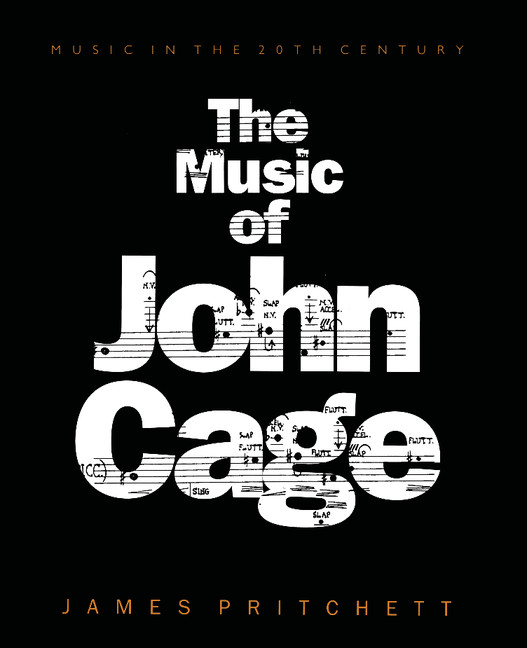
In 1992 I completed my critical survey of all of Cage’s work, The music of John Cage, which was published by Cambridge University Press in 1993. To my knowledge (and to my surprise), this remains the only survey of all of Cage’s music. Both my dissertation and my book are readily available through online ordering; just follow the links above.
I no longer consider myself a “musicologist,” but I continue to research and write about Cage’s music. In recent years, I’ve been exploring ideas about emptiness in Cage’s work: how this relates to his spiritual journey, his silent music, and his relationship to Zen Buddhism.
Separately, I’ve also been trying to write about the music of Morton Feldman. I agree completely with Alex Ross that “this extraordinary music defeats ordinary attempts at description.” I find Feldman’s music to be endlessly rejuvenating, even as it defeats me. “Practice has to be a process of endless disappointment,” as Charlotte Joko Beck said.
A large part of my involvement in new music is also with the work of my wife, Frances White. Frances and I have collaborated on various projects over the years. In 1989 she wrote a piano piece for me to play: Still life with piano. In 1990 we made Resonant Landscape, an interactive computer music installation. I designed and built all the software; Frances made all the music. In 1996 we worked in a unique way on Birdwing. She wrote a piece and I wrote a poem based on the same pair of experiences that we had had together out in the woods and fields of central New Jersey. We did this simultaneously (neither of us knew what the other was doing), then used the poem as the “program note” for the piece. They go together beautifully. Our most recent collaborations have been in the form of works that explore storytelling through both text and music. These started with The old rose reader. You can read more about this on my old website here. Two more “rose” pieces followed: The book of roses and memory and As night falls. We then began a series of pieces related to fairy tales, including From a fairy tale, The third night, and The bird and the garden (from a fairy tale).